Business analyst · Product discovery and engineering · Biodiversity conservation
Botanyat the scale ofsystems.
I'm Lucas S.B. Jordão, MSc and PhD in Botany. I spent twenty years learning how knowledge about plants is produced, and six building the infrastructure that turns it into decisions — pipelines, applications and geospatial analysis for Brazil's plant extinction-risk assessments.
- Status
- Available for new opportunities
- Setup
- Remote, hybrid or Rio de Janeiro
- Availability
- Immediate start

MIMOSA
TAXONOMIC DESCRIPTION
TAXONOMIC DESCRIPTION
00 / POINT OF VIEW
Biodiversity does not fit in a spreadsheet.
It needs systems that understand names, places, evidence and time — and turn them into decisions that can be explained.
My practice cuts across herbaria, code and public policy. I don't translate science into technology: I design both together.
01 / DETERMINATION KEY
Where I fit in your team
Four profiles,
one person.
A taxonomist identifies an unknown specimen by working through a dichotomous key: pairs of alternatives that narrow down to a name. This profile is deliberately broad. Work through the key to reach the part of it that solves your problem.
Start here
The knowledge you need…
Determination
Choose 1a or 1b to determine
02 / SOLUTION ENGINEERING
Consulting · from uncertainty to evidence
From uncertainty
to a defensible solution.
Good consulting does not begin with a framework. It begins with the decision that needs to be made — then builds enough evidence for product, architecture, investment and risk to make sense together.
Working principleThe first deliverable is not code: it is reducing the uncertainties that could make the code wrong.
Living decision modelThree.js · real-time model
uncertaintyevidence
Scroll through it or choose a stageWhich decision needs to be made?
I align the problem, expected outcome, sponsor, users, institutional limits and what must be true for the investment to be worthwhile.
problem · outcomes · actors · boundariesThe real work, not the ideal process.
I combine interviews, documents, data, observation and workshops to reveal rules, exceptions, dependencies and knowledge that still lives only in people's heads.
domain stories · journeys · data inventoryName things before drawing screens.
I organise language, domain, flows and verifiable requirements. Traceability links each decision to its need, evidence and acceptance criterion.
conceptual model · requirements · rules · traceabilityOptions before architecture.
I compare product cuts and technical alternatives by fit, maintainability, security, interoperability, total cost and reversibility.
MVP · scenarios · ADRs · evolutionary architectureAn expensive doubt becomes a short experiment.
Prototypes and spikes test adoption, data, integrations or technology before a fragile hypothesis becomes an expensive commitment.
prototype · spike · evidence · residual riskBuild with memory and feedback.
Backlogs, tests, observability and versioned decisions keep understanding alive through delivery, operation and change — when new facts inevitably appear.
roadmap · criteria · operation · learning
Discovery output
Enough confidence to invest — without pretending uncertainty reached zero.
The result is an approvable product cut, priority requirements, minimum architecture, explicit risks and a build range grounded in visible assumptions.
More details about IT consulting- 01
- priority problem
- MVP
- explicit boundary
- ≠ 0
- visible residual risk

MORPHOLOGICAL PLATE / MIMOSAdiversity of forms and terms
FEATURED PUBLICATION / 2020
Taxonomy · Comparative morphology
A shared language
for trichomes.
Before morphology could be structured as data, the language used to describe form had to be organised first.
In Trichomes in Mimosa, together with Marli Pires Morim and José Fernando A. Baumgratz, I proposed a characterisation of the genus's trichomes and a standardised terminology to make their taxonomic use more consistent and comparable.
FLORA · VOLUME 272ARTICLE 151702
Read the paper 03 / CASE STUDY
CNCFlora · 2020—2026
Infrastructure for
assessing a flora.
Assessing extinction risk means coordinating fragmented evidence, spatial analysis and a lot of people. At CNCFlora/JBRJ I turned that process into an architecture of data, queues and interfaces. I gathered and documented the requirements with Sphinx-Needs, keeping traceability between need and implementation, and built the team's service catalog in Backstage.
My scope
Architecture · requirements engineering · full stack development · ETL · automation · geoprocessing · CI/CD · service catalog · observability
Architecture of the workfrom raw data to decision
COORDINATEWorkflowstages · roles · audit trail
PROCESSBull–ProFloraETL · queues · logs
INTERPRETAvalia–CNCFloramaps · metrics · text
PUBLISHOpen data and new methodsweb pages · applicability · scientific papers
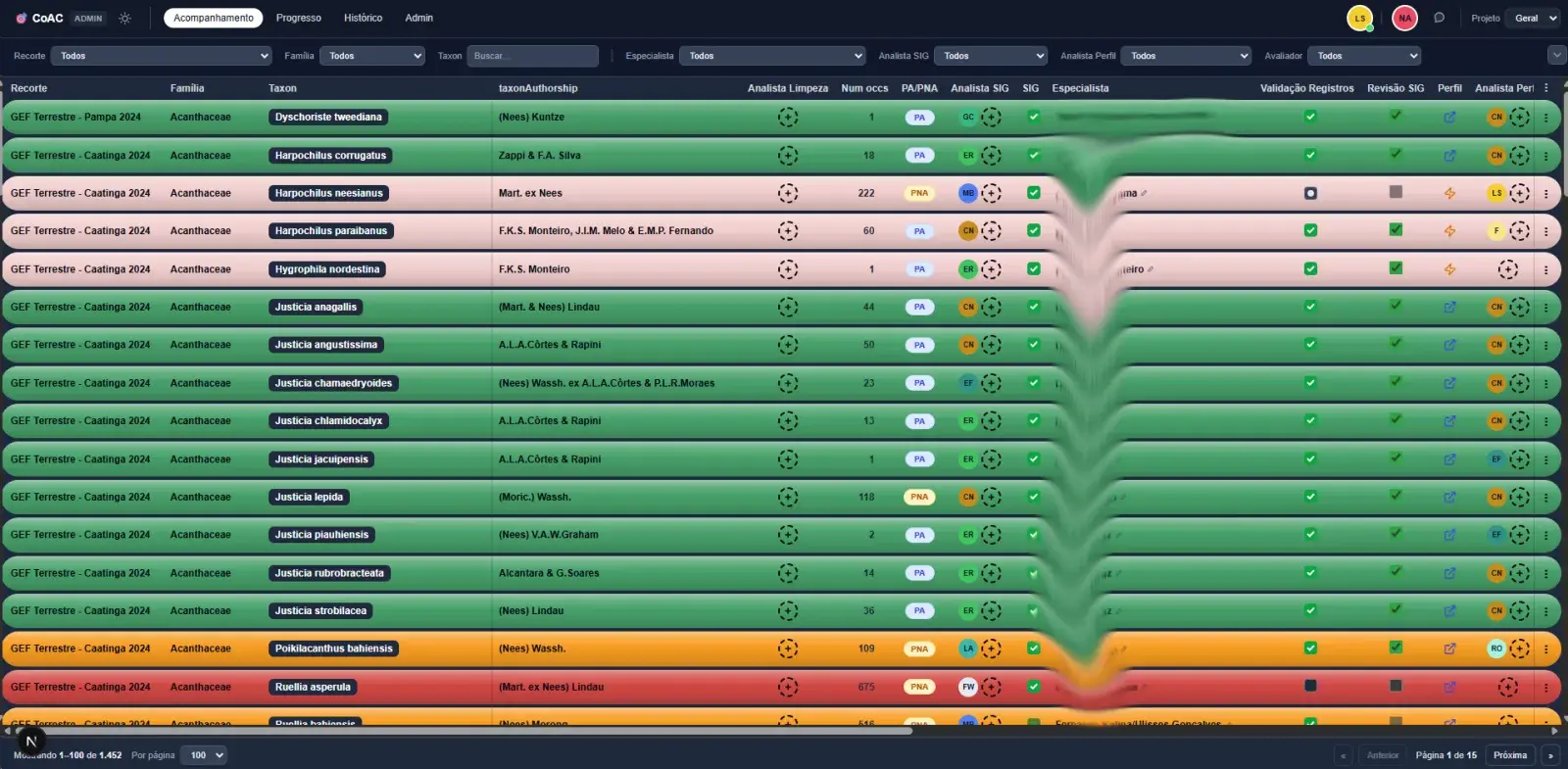 Prototype not adopted
Coordinate
Tracking Panel
I designed and built an application to make stages, owners, blockers and progress visible across hundreds of assessments in real time.
My contribution
The application was never rolled out institutionally. The workflow actually used stayed in a spreadsheet I configured with Apps Script, APIs, messaging and operational logs — and which carried the operation through to the end of the period.
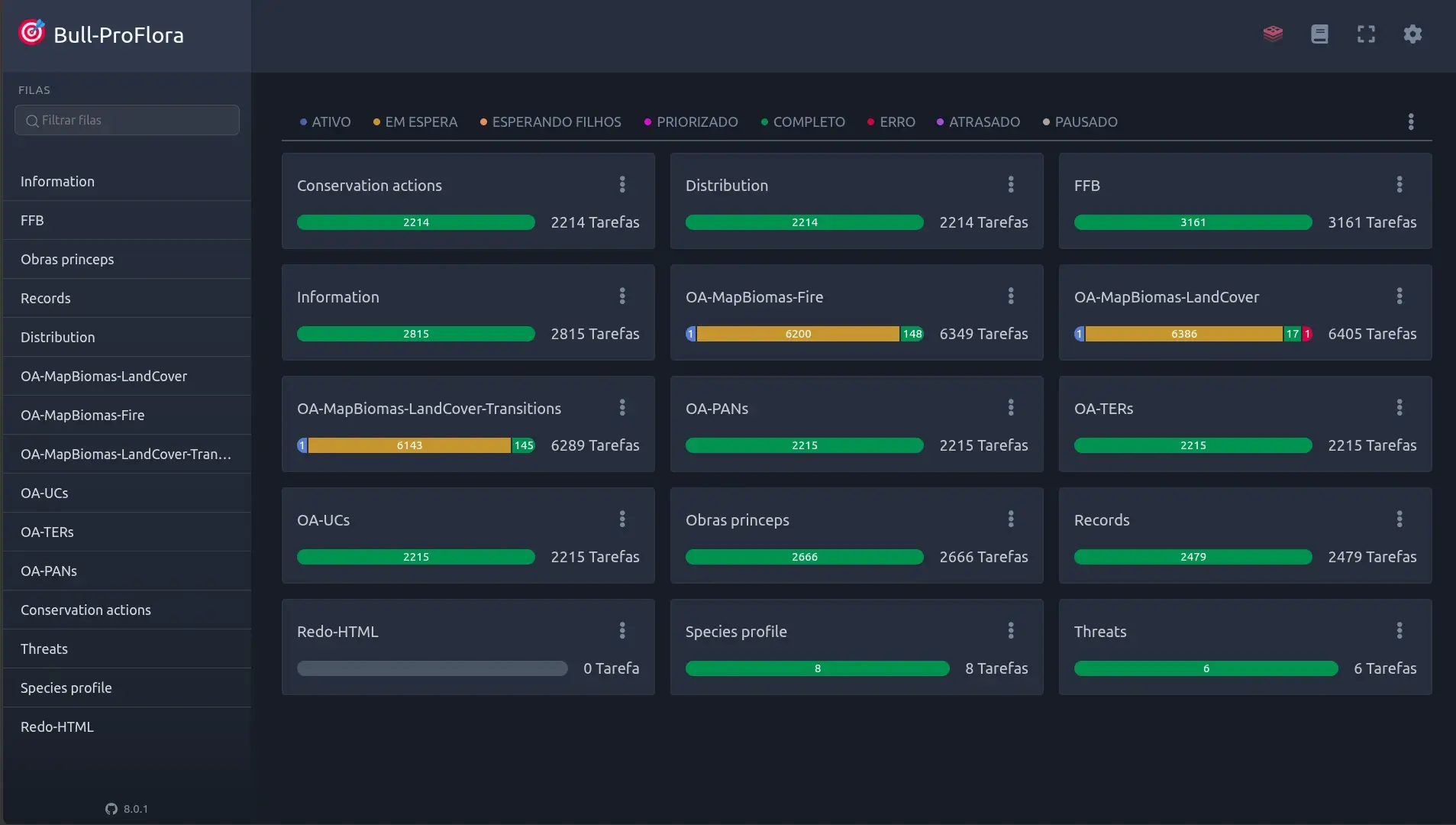 ETL in operation
01 / 02
Orchestrate
Bull–ProFlora
I designed and implemented the ETL that connected ProFlora to asynchronous queues, making heavy processing controllable, repeatable and auditable.
My contribution
The processing layer and its integrations were my delivery. The admin interface shown is Bull Board, the generic public dashboard from the Bull ecosystem.
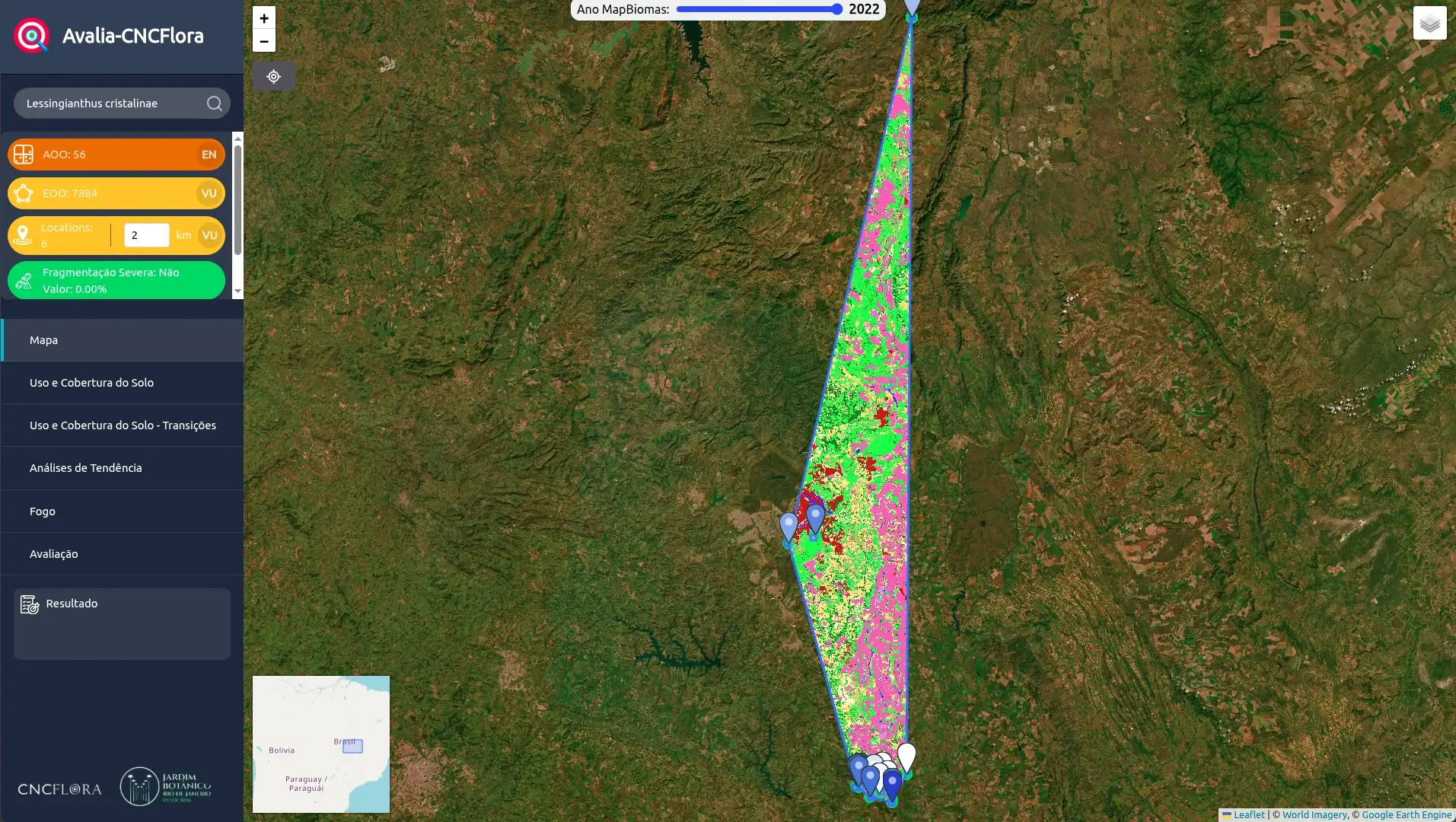 Internal application
01 / 05
Analyse
Avalia–CNCFlora
I built an environment that brings together taxonomic data, geospatial analysis, charts and supporting text for assessments under IUCN criteria.
My contribution
I worked from architecture to interface: modelled the data in PostgreSQL/PostGIS, built the NestJS back end exposing REST and GraphQL APIs, developed the Next.js front end, implemented CI/CD pipelines in GitLab, and integrated MapBiomas, AOO and EOO metrics, land-use trends and the structured writing of assessment rationales.
LEGACY SYSTEMHistorical holdings
→ ORCHESTRATIONAirflow
 TRANSFORMATIONdbt
ProFlorarecovered data
Recover
Legacy data rescue
I planned and executed the rescue of the legacy system's data, migrating the historical holdings into the ProFlora architecture.
My contribution
Explore the public data I ran every stage of the migration: orchestrated extraction and loading with Apache Airflow, modelled and validated the transformations with dbt, and delivered the recovered legacy into the new database. That data now powers CNCFlora's public portal.
03.1 / SPECIAL MENTION
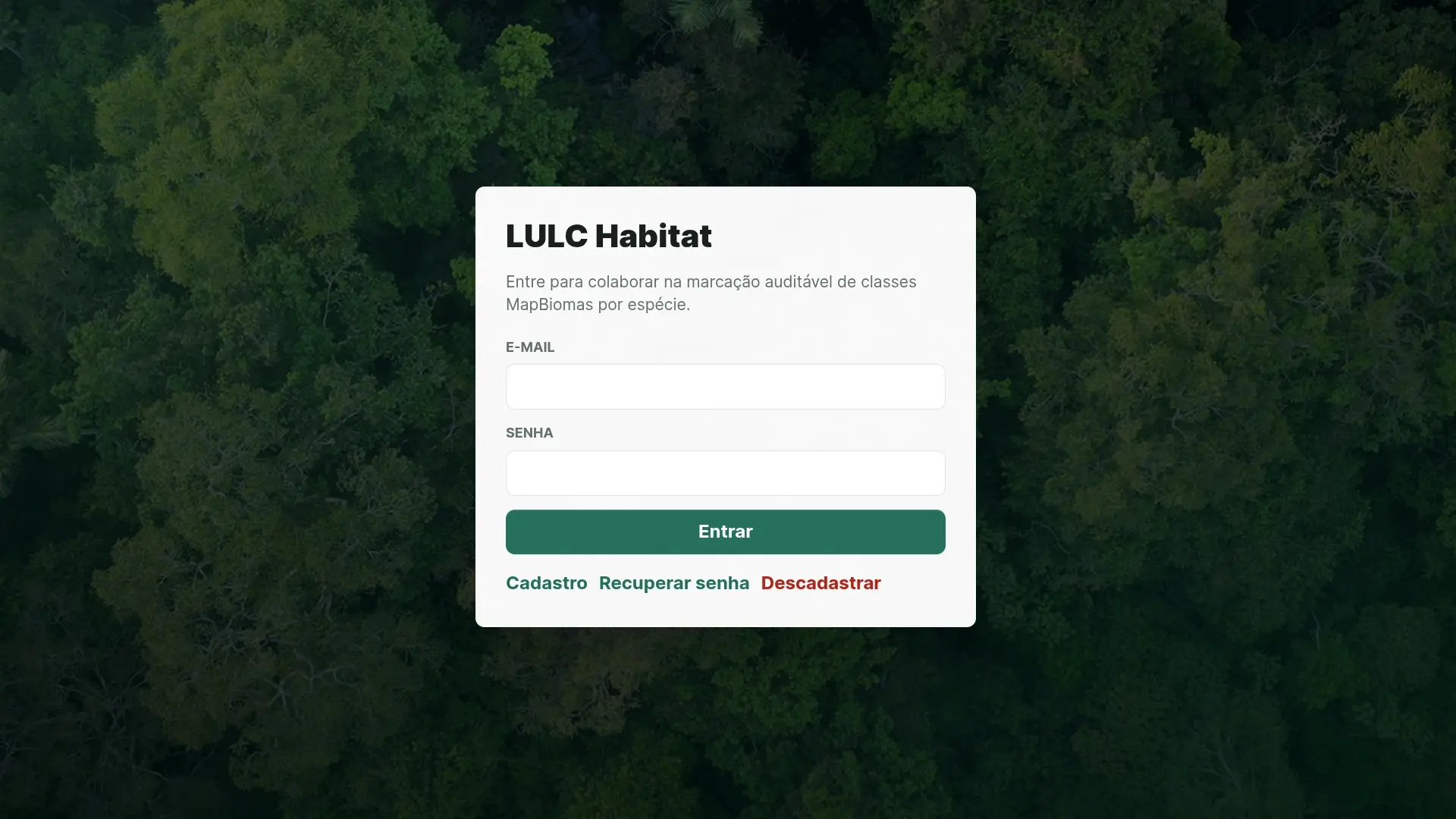
LULC Habitat · collaborative application
A system ready to
evolve through collaboration.
BUILT · ON STANDBY
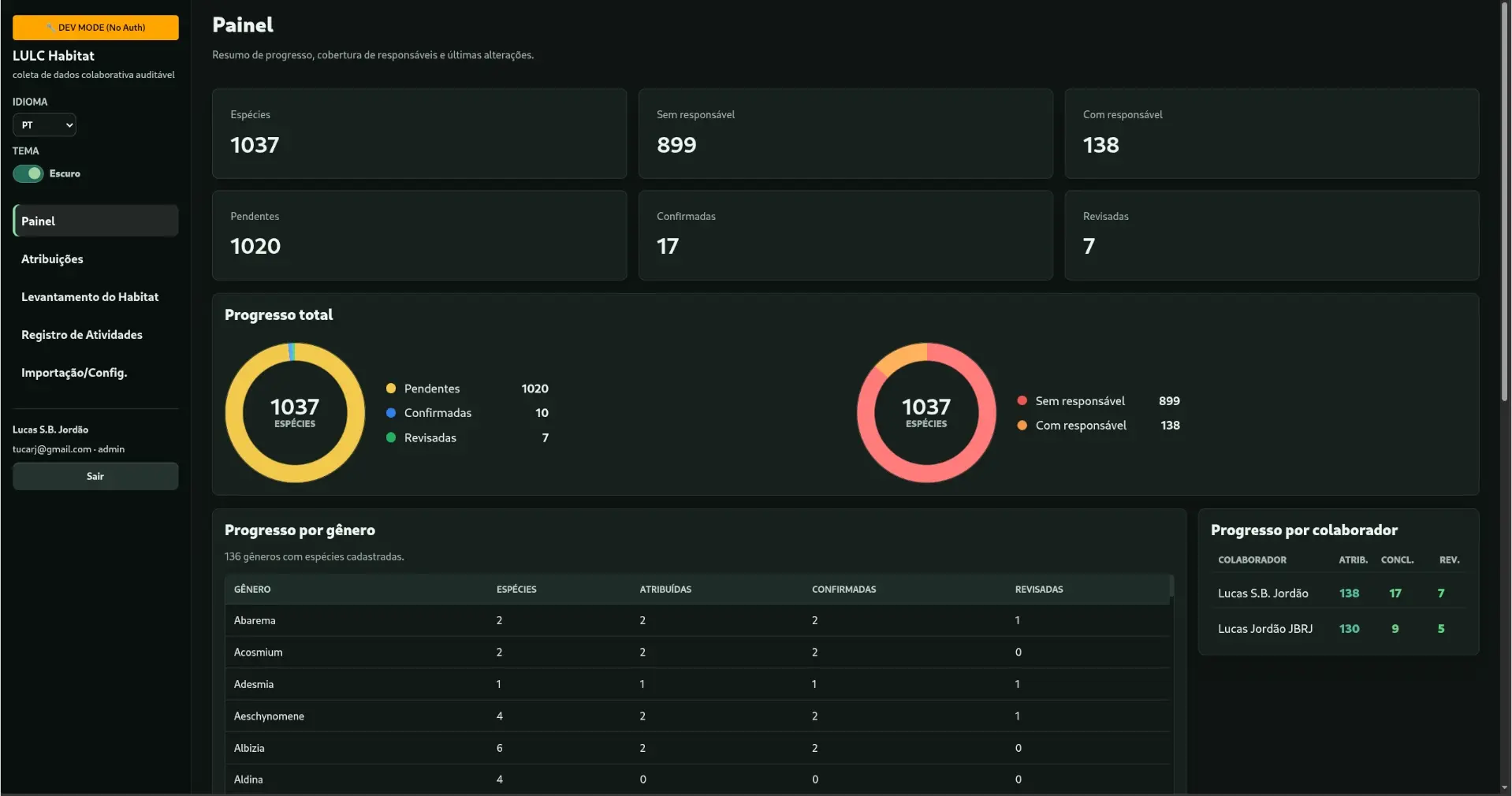
The application is functional and published. It is on standby because its next stage should be built together with the collaborators who will use it, incorporating the real data-validation and governance workflow.
Real-time updates
Supabase Realtime channels over WebSocket synchronise annotations, statuses, divergences, and assignments across open sessions.
Keyboard-driven entry
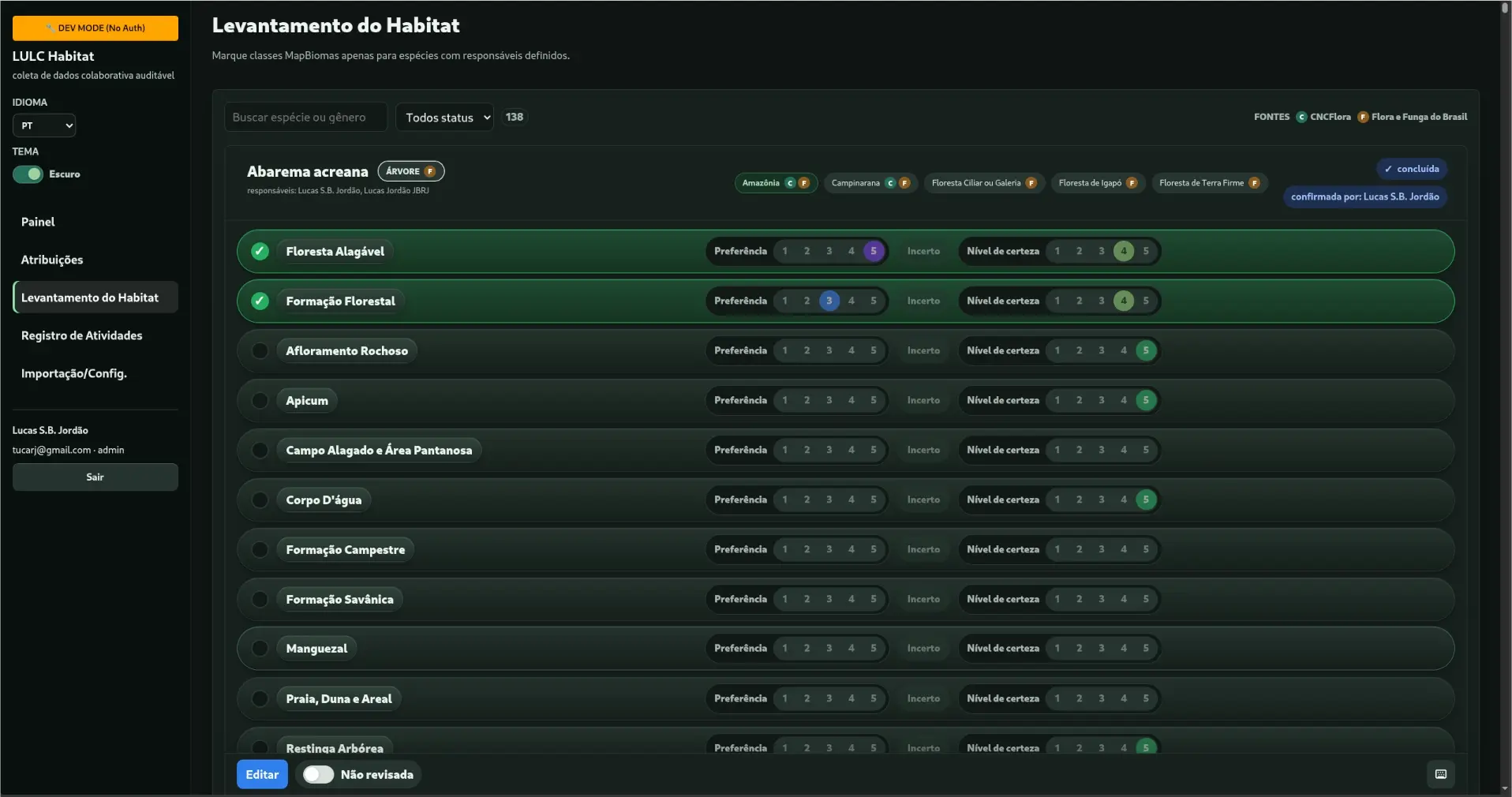
A dedicated mode lets users navigate classes and fields with arrows, Enter, Space, and shortcuts, speeding up annotation without relying on a mouse.
Peer review
Annotations can be checked and reviewed by collaborators, creating an explicit path towards the best data with authorship and history.
Conflicts without data loss
A divergence becomes a commented proposal; the current data remains preserved until the responsible collaborator accepts or rejects the change.
The dashboard and annotation screens retain the DEV MODE badge from the environment in which they were captured.
04 / SELECTED WORK
Projects that keep
knowledge in circulation.
Software, data and publications built so scientific knowledge can be queried, tested and reused. Everything below is public and verifiable.
14 projects in All
 01Open project
 Taxonomy as code Taxonomy
TypeTaxonScript
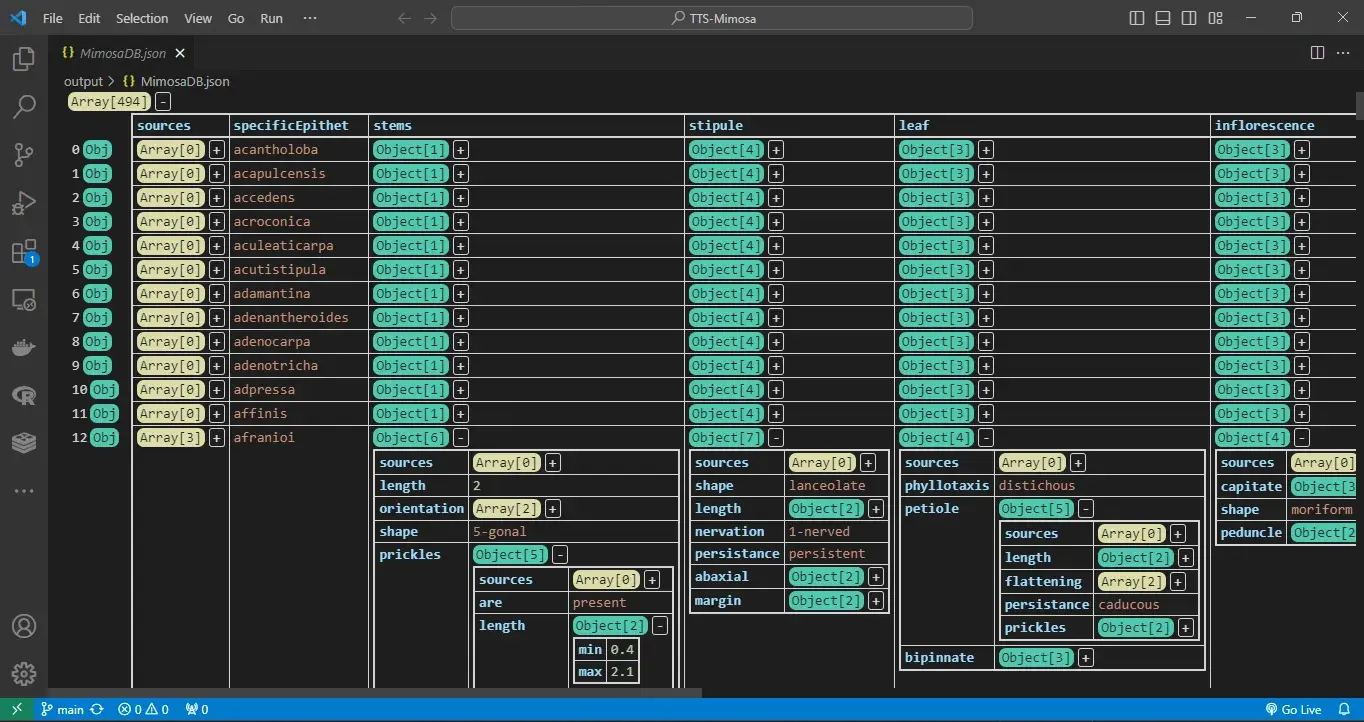
A published framework that turns biological descriptions into typed, validatable, versionable and collaborative data — with its own scholar record on Google Patents.
 02Open project
 Explorable knowledge Software
TTS–Mimosa
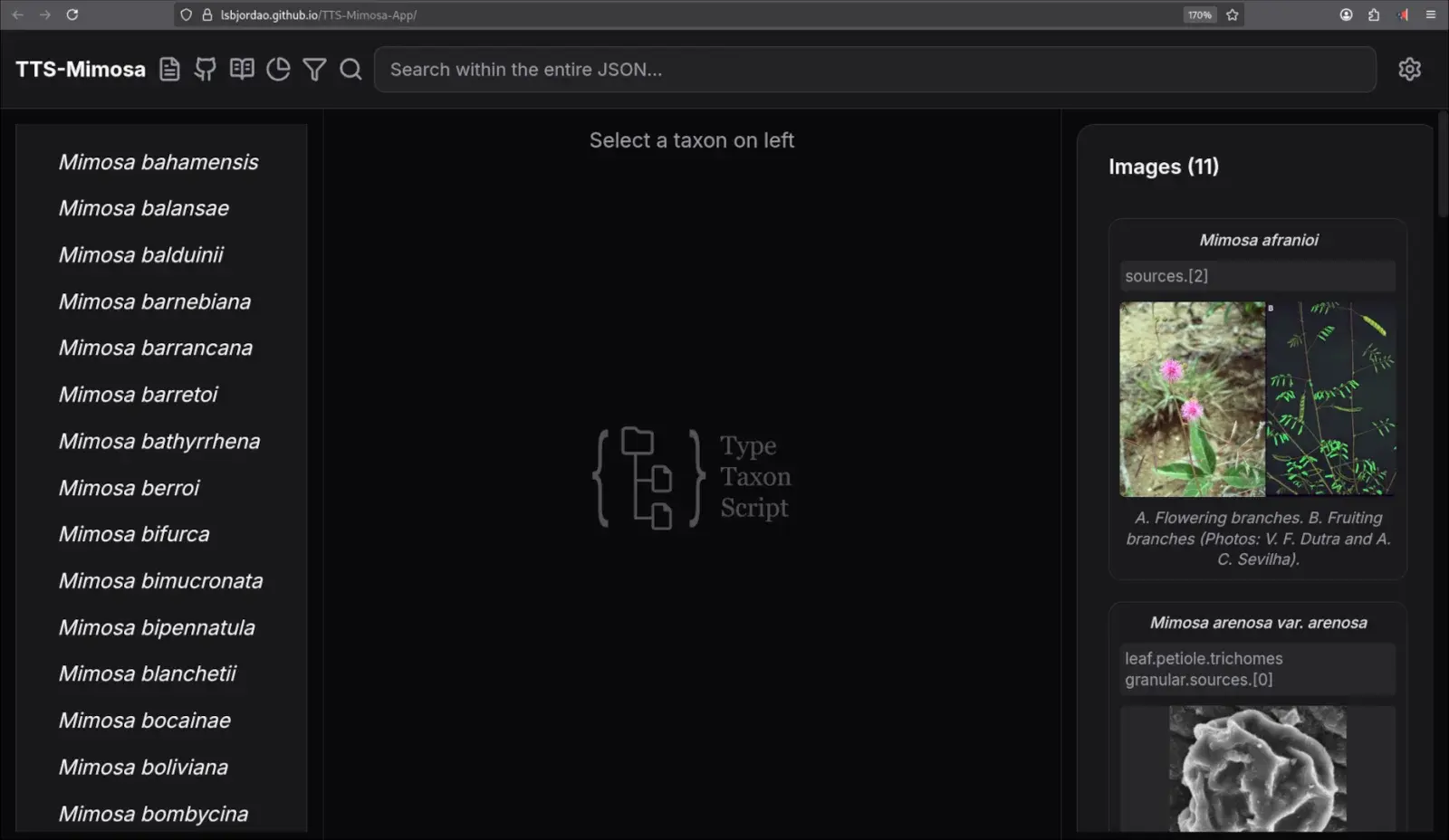
A proof of concept connecting morphological characters, images and sources in a navigable taxonomic interface.
 03Open project
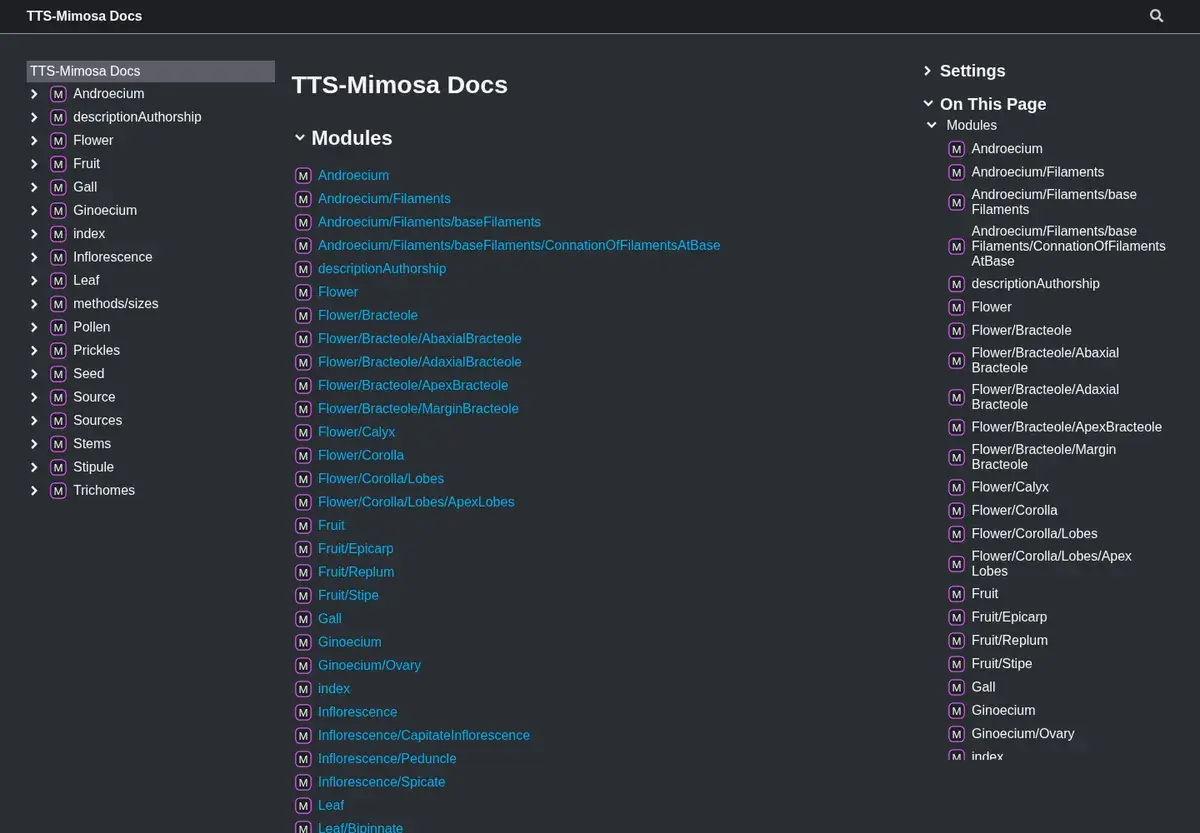
 Taxonomic characters as software Taxonomy
TTS–Mimosa Docs
Typed documentation of Mimosa characters, organised into navigable modules and maintained with software engineering tooling.
 04Open project
 Data-driven conservation Conservation
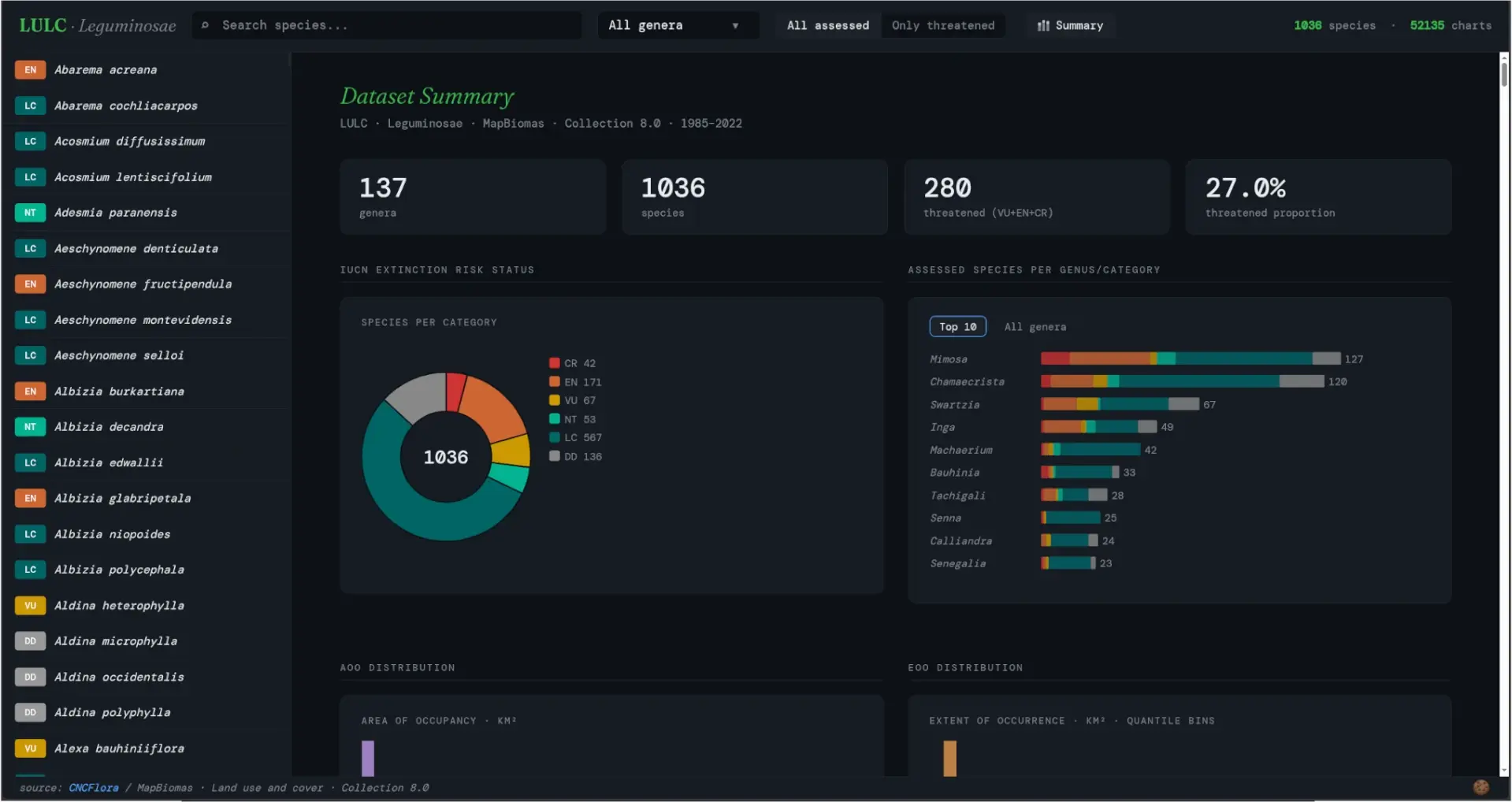
LULC × Leguminosae
Land-cover and land-use time series converted into quantitative evidence for extinction-risk assessments.
05Open project Secure collaborative access Software
LULC Habitat
Collaborative web application with login, user verification and authorisation, JWT-based sessions, password recovery, and automated transactional email with Supabase Auth, Resend, and SMTP.
 06Open project
 History, ranking and accepted names Software
FFB Chronology
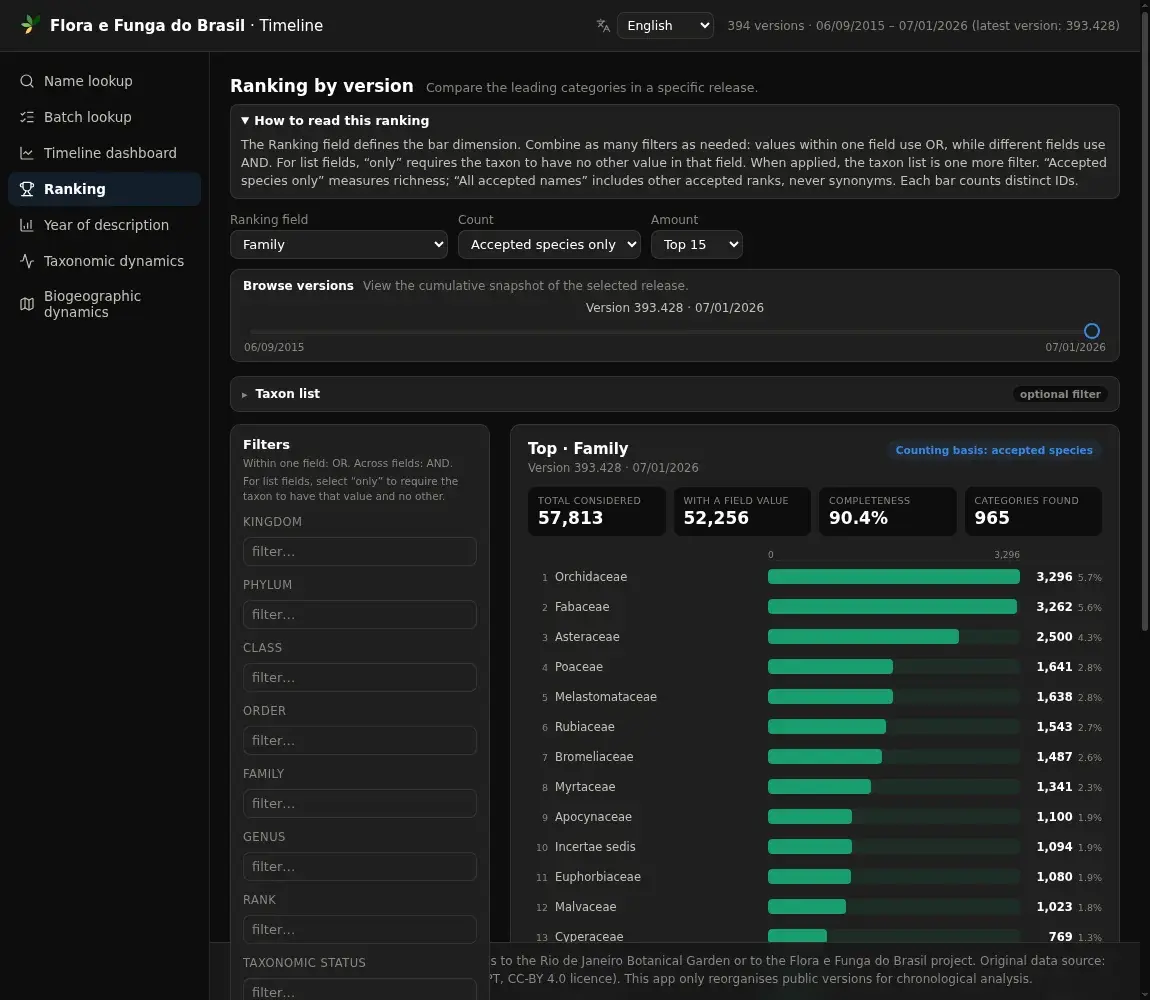
A general-purpose application that compares 394 versions of the Flora e Funga do Brasil, surfaces taxonomic changes, builds filterable rankings and resolves accepted names in batch with fuzzy search.
 07Open project
 Mathematics in the browser Software
Curva
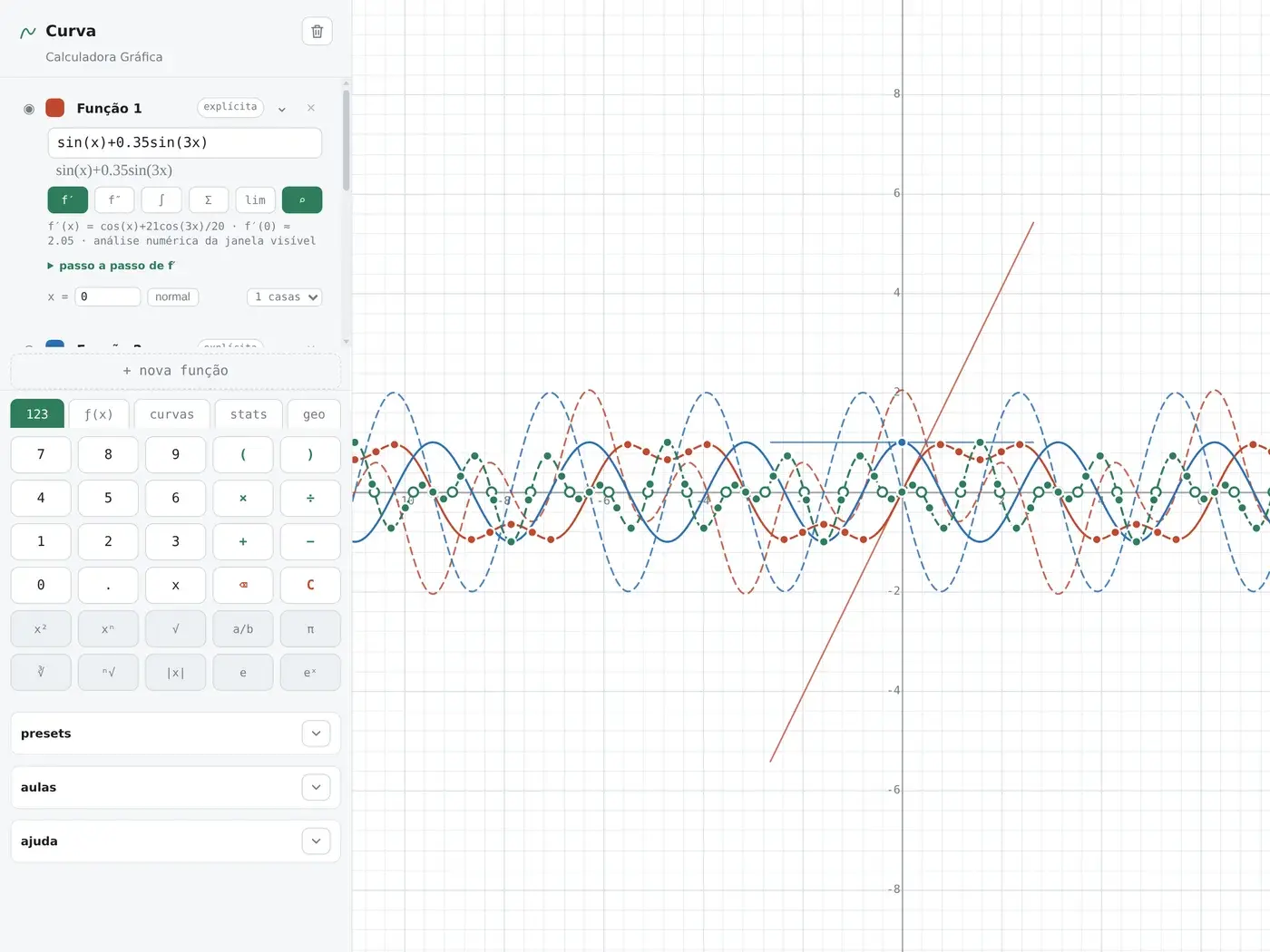
A graphing calculator written from scratch, with no maths library at all: its own expression parser, step-by-step symbolic differentiation, numerical integration and limits, curve fitting with residuals and SSE, statistics and analytic geometry. It grew out of my Data Science degree.
 08Open project
 Assisted scientific writing Open science
Quarto Scientific Writing
An extension with real-time diagnostics for style, structure, readability and consistency in scientific manuscripts.
 09Open project
 Reading without noise Open science
Quarto Focus Mode
Focus mode, section-by-section presentation, keyboard navigation and smart progress for Quarto sites and books.
 10Open project
 One document, many versions Open science
Quarto Conditional Vars
An extension that renders conditional content from project variables, with composable rules and compatibility across Quarto engines.
 11Open project
 How to cite, in one click Open science
Quarto cite-this
An extension that adds an accessible "how to cite" control to Quarto books and websites, copying the citation as CSL-formatted text or BibTeX. Citations are built at render time, with no browser library, and work with embedded resources or with JavaScript off.
 12Open project
 Native authoring, full publishing Open science
Markdown 4 Quarto
I built a VS Code extension that brings alerts, footnotes, cross-references, BibTeX/CSL citations, bibliographies and project variables to the native Markdown preview. .md files remain the writing surface; Quarto handles composition and publishing.
 13Open project
 Requirements as code Software
Quarto-Needs
I built a requirements-as-code engine for Quarto: requirements, architecture decisions, tests and evidence are declared as .need blocks inside the .qmd sources and resolved into a typed graph that validates traceability, measures coverage and enforces quality gates. The project models and verifies itself.
 14Open project
 Portable styles for documents Software
Semantic CSS Studio
I developed a visual editor that turns typography, color and layout choices into CSS for semantic HTML. I separated the TypeScript compiler from the React interface and added document previews, Quarto export and reusable themes without the editor runtime.
05 / MOBILE DEVELOPMENT
React Native · Expo · Android & iOS
An idea that fits
in the palm of your hand.
This MVP turns my portfolio into a direct, tactile and portable mobile experience. The same TypeScript codebase serves Android, iOS and the web, while each platform keeps what feels native to it.
- 01
One codebase, two platforms
Shared components and business rules for Android and iOS mean less duplication and faster product iteration.
- 02
Interaction that feels native
System sharing, haptic feedback, safe areas and gestures are part of the architecture from the first prototype.
- 03
From prototype to delivery
Responsive layout, bundled fonts, accessibility and verifiable builds make the MVP ready to learn from real use.
- Volume +Raise the volume
- Volume −Lower the volume
- Power on / offTurn the device on and off
Scroll, tap and open links inside the device.
Built with
- React Native
- Expo 54
- TypeScript
- Native APIs
- Responsive UI
06 / TEACHING
Teaching · from primary school to graduate courses
Teaching is the oldest
part of my practice.
09selected classes, courses and modules
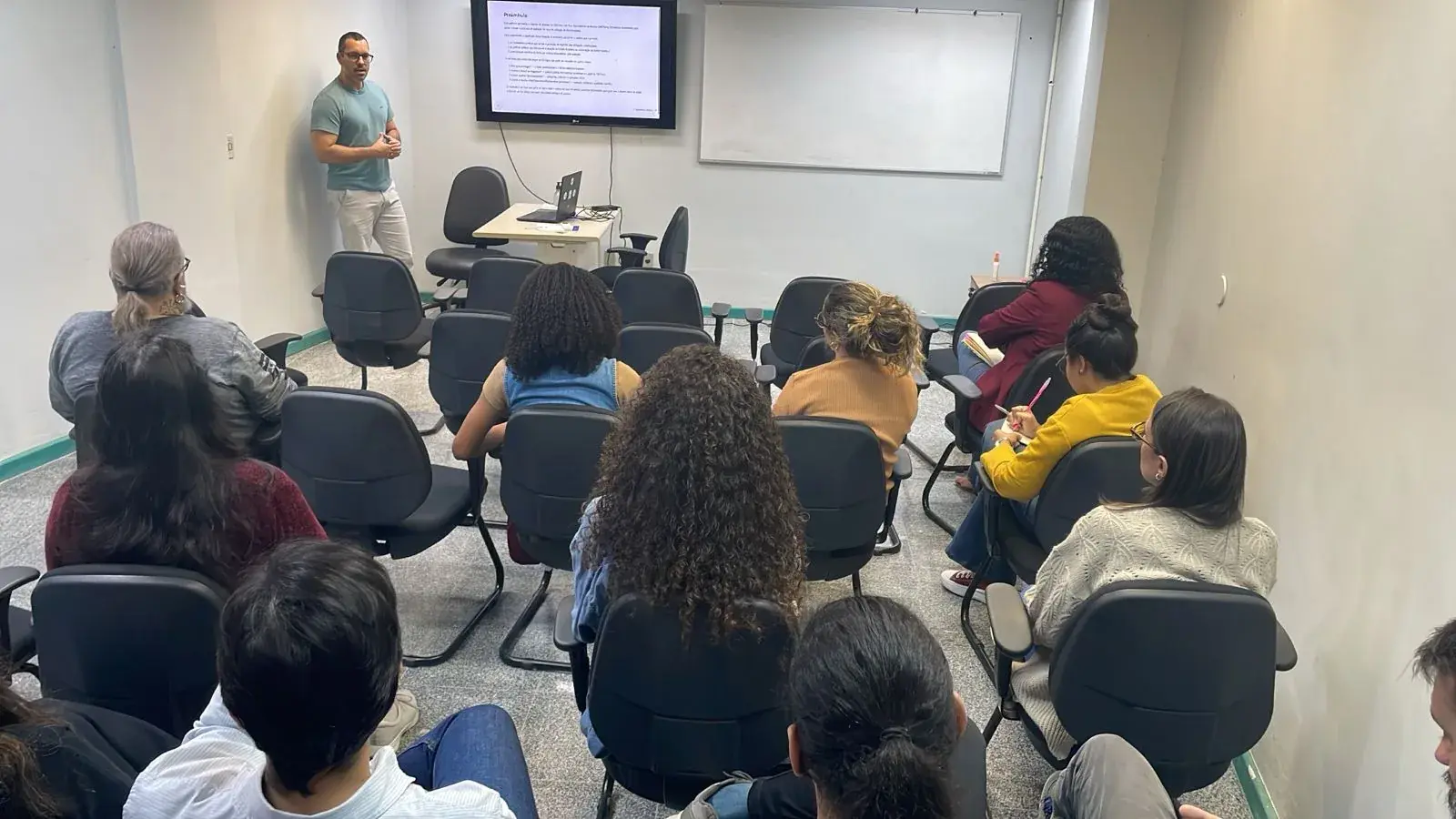
I started as a mycology teaching assistant in 2007 and never stopped. I taught science in primary school and environmental education at a teaching nursery, and today I run graduate courses and staff training on phyloinformatics, environmental law and extinction risk assessment. It is the same practice as the rest of this page: making methods and evidence usable by other people.
QualificationLicentiate in Biological Sciences (2009) · BSc (2007) · Universidade Santa Úrsula
- Course · module
Staff training in extinction risk assessment
CNCFlora / JBRJ · Rio de Janeiro - Course · module30h contact hours
Threatened Species: from public policy to extinction risk assessment
Universidade Federal de Mato Grosso do Sul · remote - Course · module4h contact hours
Phylogeny, biogeography and diversification of Mimosa ser. Paucifoliatae — guest lecturer on EB004, Introduction to Phylogenetic Systematics
Escola Nacional de Botânica Tropical / JBRJ - Course · module60h contact hours
Special Topics: Introduction to Phyloinformatics (EB02935)
Escola Nacional de Botânica Tropical / JBRJ - Course · module
Forensic botany, general botany and law applied to flora protection — preparatory course for forensic examiners
Curso Bioforense · Rio de Janeiro - Teaching post
Environmental education teacher
Horto Escola Artesanal · São Pedro da Aldeia, RJ - Teaching post
Teacher II · basic education
Rio de Janeiro State Department of Education - Teaching post
Science teacher · lower secondary school
Sociedade Educacional Laranjeiras · Rio de Janeiro - Course · module60h contact hours
Mycology teaching assistant
Universidade Santa Úrsula · Rio de Janeiro
A selection, not the full record — the complete list is on the Lattes CV.
Open-access courses and handbooks
A shelf for
teaching in public.
Course books written in Quarto and published openly: environmental law, extinction risk assessment, public policy and phyloinformatics. Each spine is as thick as the book has chapters.
COURSE 01 · 23 chaptersLaw applied to the protection of Brazilian flora and vegetation
- Atlantic Forest Biome Act
- Forest Act and public forest management
- Crimes and offences against flora
- Sequence assembly and alignment
- Evolution models and phylogenetic analysis
- Phylogenetics in R
- PRONABIO, CONABIO and Pró-Espécies
- Official national lists of threatened species
- CNCFlora/JBRJ and CITES
- Fundamental principles
- Organisation of the State and its Powers
- Economic and social order
- Biodiversity knowledge and conservation
- Sustainable use and benefit sharing
- Legal and institutional capacity
- The IUCN Red List
- Data quality
- Categories and criteria
- The Brazilian legal system
- Constitutional environmental law
- National Environment Policy
- Dichotomous key viewer
- Step-by-step identification mode
- JSON structure editor
08 volumes · 74 chapters · open access
07 / TECHNOLOGY
From scientific writing to infrastructure
Technologies that run through
the work.
61technologies & methods
A toolkit built on real problems: scientific applications, data engineering, reproducible publishing and infrastructure.
01Languages & interfaces18 items
02Data & pipelines15 items
03Knowledge & semantics5 items
04Infrastructure, cloud & access13 items
05Publishing & methods10 items
 JavaScriptLanguages & interfaces
 TypeScriptLanguages & interfaces
 PythonLanguages & interfaces
 RLanguages & interfaces
 Node.jsLanguages & interfaces
 ReactLanguages & interfaces
 React NativeLanguages & interfaces
 ExpoLanguages & interfaces
 SvelteLanguages & interfaces
 Next.jsLanguages & interfaces
 NextraLanguages & interfaces
 ViteLanguages & interfaces
 GraphQLLanguages & interfaces
 AstroLanguages & interfaces
 Three.jsLanguages & interfaces
 GSAPLanguages & interfaces
 WebGLLanguages & interfaces
.*RegExLanguages & interfaces
 dbtData & pipelines
 MongoDBData & pipelines
 PostgreSQLData & pipelines
 Apache ParquetData & pipelines
 DuckDBData & pipelines
 TrinoData & pipelines
 RedisData & pipelines
 Apache SupersetData & pipelines
 Apache AirflowData & pipelines
 Apache KafkaData & pipelines
 RabbitMQData & pipelines
 NumPyData & pipelines
 PandasData & pipelines
 JupyterData & pipelines
 Google Earth EngineData & pipelines
 ProtégéKnowledge & semantics
 Apache Jena FusekiKnowledge & semantics
 Neo4jKnowledge & semantics
 ObsidianKnowledge & semantics
◎OWL / RDF / SPARQLKnowledge & semantics
 LinuxInfrastructure, cloud & access
 DebianInfrastructure, cloud & access
 FedoraInfrastructure, cloud & access
 DockerInfrastructure, cloud & access
 GitInfrastructure, cloud & access
 BackstageInfrastructure, cloud & access
 Google CloudInfrastructure, cloud & access
 AWSInfrastructure, cloud & access
 AzureInfrastructure, cloud & access
 Supabase AuthInfrastructure, cloud & access
 JWTInfrastructure, cloud & access
 ResendInfrastructure, cloud & access
 SMTPInfrastructure, cloud & access
 LaTeXPublishing & methods
 QuartoPublishing & methods
 SphinxPublishing & methodsSphinx-NeedsPublishing & methods
 Reveal.jsPublishing & methods
◇CRISP-DMPublishing & methods
KKDDPublishing & methods
 ScrumPublishing & methods
↗AgilePublishing & methods
 GIMPPublishing & methods
What I do with them
Tools are the means.
Skills are the work.
59skills
The list above says what I work with. This one says what I solve — grouped by problem domain.
Data engineering
- Automated ETL and ELT
- Pipeline orchestration
- Messaging and asynchronous queues
- Transformation modelling and testing
- Data-intensive applications
- Data contracts and versioning
- Legacy data migration
Full stack development
- End-to-end web applications
- Mobile applications with React Native and Expo
- REST and GraphQL APIs with NestJS
- Componentisation in React and Svelte
- Schema modelling and migration
- Web application security — authentication and authorisation, JWT, sessions, password recovery, and transactional email with Supabase Auth and Resend (LULC-Habitat)
- Static rendering, SSR and performance
- Web animation with GSAP
- Interactive 3D graphics in the browser with Three.js and WebGL
- Automated testing and code review
Extraction & integration
- Data extraction with regex
- Web scraping and PDF scraping
- Text mining
- REST and GraphQL APIs
- Integration of heterogeneous sources
- FAIR data and biodiversity vocabularies
Modelling & databases
- Relational databases and analytical SQL
- Document-oriented NoSQL
- Graph-oriented NoSQL
- Vector search and embeddings
- Ontologies, RDF and SPARQL
- Business domain modelling
- Design patterns
Platform & infrastructure
- Microservice architecture
- Platform engineering
- CI/CD and DevOps practices
- IaaS and public cloud
- Containers and reproducible environments
- Git, branching flows and review
- Observability and service catalogue
Geospatial & conservation
- Spatial databases and queries with PostGIS
- Land-cover and land-use time series
- Remote sensing with Google Earth Engine
- AOO, EOO and habitat-loss metrics
- IUCN Red List criteria
- Landscape ecology and ecological corridors
- Scenario modelling with CA-Markov
Analysis & decision
- Reproducible indicators and reporting
- Financial data analysis
- Web analytics with Google Analytics
- Applied statistics and regression
- Analytical dashboards and BI
- Data storytelling
- CRISP-DM and KDD
Solution engineering
- Business analysis
- Product discovery
- Requirements engineering
- Solution architecture
- Digital transformation
- Technology consulting
- Agile software development
- Full-stack development
08 / PHENOLOGY
Working rhythm, 2023—2026
Phenology of a
living repository.
Phenology is the study of a plant's cycles of activity across the year: when it flushes, when it flowers, when it rests. The same instrument reads four years of commits.
The scale is shared across all four years — GitHub normalises each year on its own, which would make a slow year look as intense as a strong one.
- Contributions in the period
- 4,654
- Days with activity
- 776
- Peak in a single day
- 96
- Period observed
- 2023—26
Source: GitHub contributions API · lsbjordao · private repositories included · captured JUL 30, 2026
| Year | JAN | FEB | MAR | APR | MAY | JUN | JUL | AUG | SEP | OCT | NOV | DEC |
|---|---|---|---|---|---|---|---|---|---|---|---|---|
| 2023 | 21 | 62 | 58 | 62 | 99 | 61 | 162 | 213 | 148 | 29 | 80 | 135 |
| 2024 | 88 | 103 | 110 | 171 | 86 | 43 | 38 | 72 | 109 | 104 | 65 | 22 |
| 2025 | 17 | 87 | 122 | 187 | 64 | 26 | 17 | 17 | 10 | 153 | 256 | 36 |
| 2026 | 38 | 128 | 109 | 208 | 466 | 271 | 301 | 0 | 0 | 0 | 0 | 0 |
Lineage
The career is reticulate, not linear
Two lineages run in parallel for a decade — plant systematics and the digital curation of collections — and merge in 2020, when assessing extinction risk began to demand taxonomy and data engineering at the same time.
Career archive · Botany01 / 20
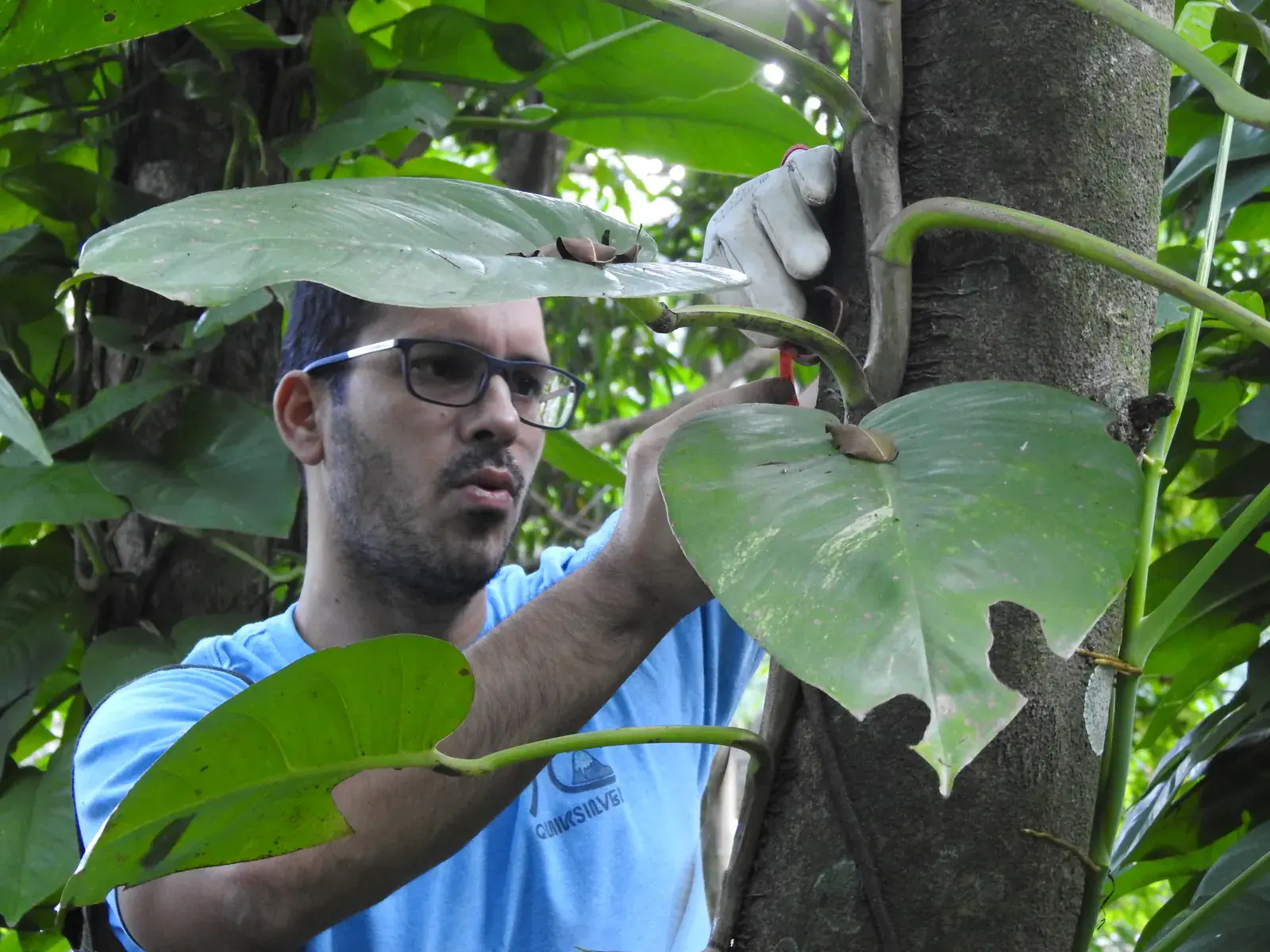
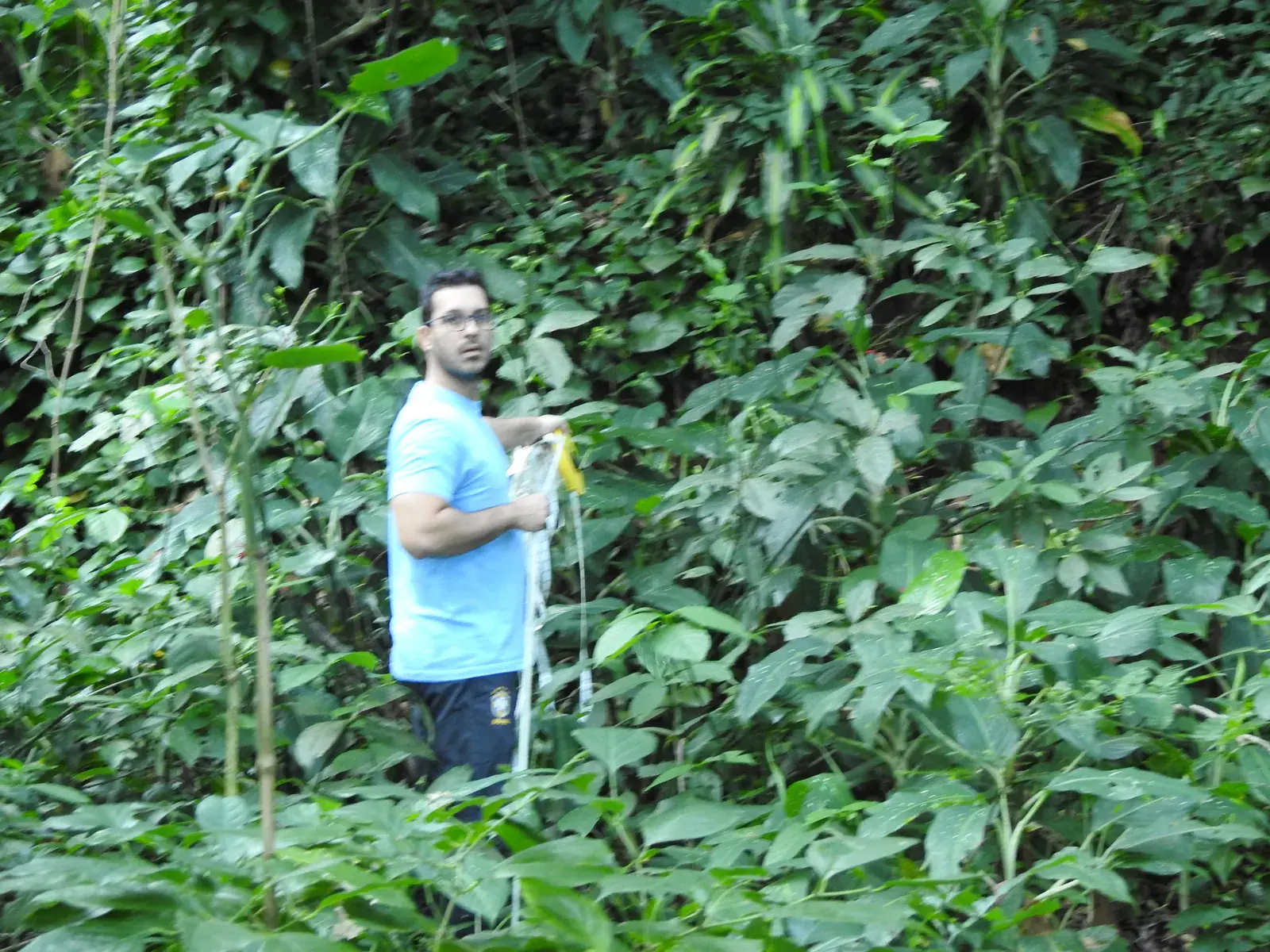
I learned in the field.
Fieldwork · botanical practiceReading the plant before recording the dataBotanical expeditions · Brazil
09 / CAREER
From the specimen
to the infrastructure.
Before the pipelines came the trails, benches and collections. That is where I learned to observe rigorously, preserve context and turn scattered evidence into knowledge other people can use.
Fieldwork · botanical practice
Knowledge with its feet on the ground
Botanical expeditions · BrazilCollecting means deciding under real conditions: observing, documenting, preserving context and returning with reliable evidence. That field discipline still guides how I design data and systems.
Laboratory · molecular biology
From morphology to DNA
Cenargen / EMBRAPA · Brasília, BrazilDuring my PhD, I worked in the Cenargen/EMBRAPA laboratory, bringing together molecular data, phylogenetics, biogeography and the evolutionary history of plants I already knew from the field.
Herbaria · scientific collections
Physical collections, accessible knowledge
Museu Nacional / UFRJ · NYBGI worked with botanical collections throughout my training. In 2016, I spent a year at the New York Botanical Garden, digitising specimens and helping turn physical holdings into accessible data.
Timeline2004 — now
The first specimen
I start studying Mimosa at the National School of Tropical Botany. The genus becomes the thread running through everything that follows.
Taxonomy in depth
Master's at Museu Nacional/UFRJ: working with herbarium collections, expeditions, morphological description and the first new species.
From morphology to phylogeny
PhD at JBRJ. In 2016, I spend a year at NYBG digitising specimens; at Cenargen/EMBRAPA, I work with DNA and phylogenetics. Biogeography and six loci in conversation — and my first lines of R.
Conservation at scale
Analyst at CNCFlora/JBRJ's Red List unit. I turn assessment rules, data and routines into pipelines, applications and operational workflows.
Formalising the engineering
A second degree, in Data Science, at Universidade Estácio de Sá, to give name and method to what was already daily practice: modelling, statistics and data engineering. Expected completion in July 2027.
Looking for the next team
I close the CNCFlora chapter with systems in operation, legacy data recovered and methods published. I'm looking for a team where domain, data and product are the same conversation.
Continuing education14 courses · 770h recorded on the Lattes CV
- 20h
eMAG accessibility for content authors
National School of Public Administration (ENAP) - 30h
eMAG accessibility for developers
National School of Public Administration (ENAP) - 50h
Data analysis for research in the Brazilian public health system
Oswaldo Cruz Foundation (FIOCRUZ) - 20h
IT governance in the context of digital transformation
National School of Public Administration (ENAP) Spatial prioritisation for conservation
Rio de Janeiro Botanical Garden Research Institute- 15h
Landscape ecology and ecological corridor modelling
University of Brasília (UnB) - 40h
Satellite image analysis with Google Earth Engine
Solved — Geoinformation Solutions - 18h
Philosophy of Law
Institute for the Reform of State–Business Relations (IREE) - 30h
Economics for thinking about Brazil
Institute for the Reform of State–Business Relations (IREE) - 40h
Education, environment and society
Rio de Janeiro Botanical Garden Research Institute - 75h
Scanning electron microscopy
Rio de Janeiro Botanical Garden Research Institute - 360h
Environmental fundamentals
Academia do Concurso · Rio de Janeiro - 8h
History of astronomy
Rio de Janeiro City Planetarium Foundation - 64h
Green leadership training
Fundação Verde Herbert Daniel
10 / CV AS A GRAPH
Two lenses, the same graph
The CV
beyond the tree.
A CV usually organises a career as a tree: education, experience, skills and output sorted into categories. But a professional life is far more interconnected. Projects link technologies, methods, people, institutions and competencies. Representing these relations as a graph makes previously implicit knowledge visible, revealing new ways to explore, understand and discover a career.
Interface 01 · query
A queryable CV
A text interface for asking about the CV the way you'd ask a person: by project, technology, period or skill.
Query the CVInterface 02 · graph
A networked CV
The same information as an interactive graph, browsable in 2D and 3D — nodes and connections instead of closed categories.
Explore the graph11 / CONTACT
Next chapter
Science and public management need
living, integrated infrastructure.
I'm available for new opportunities and interested in teams where biodiversity, data and digital product have to work as one thing. I reply on LinkedIn within one business day.